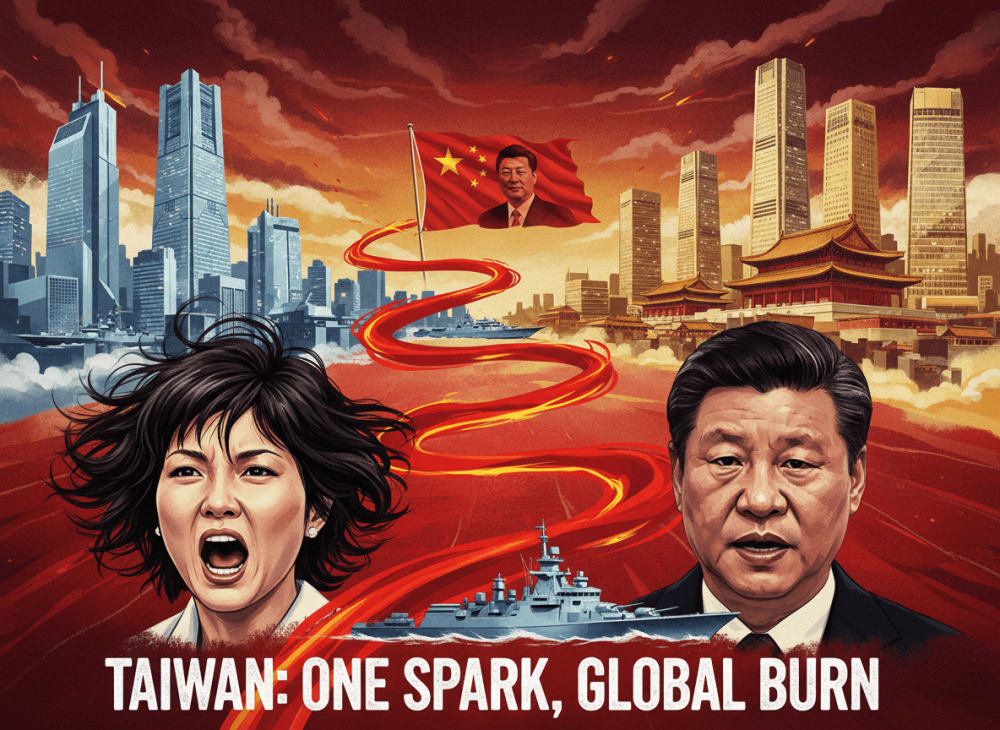
What Did Sanae Takaichi Actually Say? Japan's Prime Minister Sanae Takaichi dropped a bombshell during a parliamentary session in Tokyo on November 7th. She flat-out declared that any Chinese use of force against Taiwan would be seen as an existential threat to Japan itself. In plain terms, if Beijing invades or blockades the island, Tokyo could invoke its collective self-defense clause, meaning Japan might jump in militarily alongside allies like the US. This isn't idle chat; it's a direct nod to Taiwan's proximity-just 100 miles from Japan's Okinawa islands-and the shared sea lanes that keep both economies humming. Takaichi's rationale? Taiwan's fall would choke off vital shipping routes and invite Chinese dominance right on Japan's doorstep. No mincing words; it's a line in the sand drawn in the East China Sea.
China's Fiery Backlash:
How Beijing Hit Back. China didn't waste a breath. By November 10th, their Foreign Ministry slammed Takaichi's remarks as reckless provocation and a dangerous echo of Japan's imperial past-WWII ghosts they never let die. They lodged formal protests, ramped up coast guard patrols near disputed islands, and issued a stark travel advisory urging Chinese citizens to steer clear of Japan amid rising risks. Airlines like Air China started offering free cancellations on flights to Tokyo, and tourism bookings tanked overnight. State media, like the PLA Daily, warned Japan it's on a path of no return if it meddles in Taiwan affairs. Bottom line: Beijing's flexing soft power, now tariffs or cyber jabs could follow if Tokyo doesn't backpedal. Japan responded by sending an envoy to Beijing yesterday to cool things off, but the frost is thick.
The Root of It All:
Why Speak Up Now? Takaichi's timing isn't random. She's fresh off taking the PM reins in October 2025, riding a wave of nationalist sentiment after Shigeru Ishiba's rocky tenure. Taiwan tensions have simmered for years-China claims the island as its own, while Japan sees it as a democratic buffer against Beijing's expansion. Recent PLA war games around Taiwan and US-Japan joint drills pushed her to clarify Japan's stance: we're not neutral anymore. It's about survival-economics, security, the lot. With 60% of global microchips made in Taiwan, ignoring this would be suicidal for tech-hungry Japan. Her words? A calculated signal to allies: count us in, but don't make us go first.
The Brewing Problems:
Immediate Headaches on the Horizon: Short-term? Tourism's already bleeding-Japan loses billions from Chinese visitors yearly, and empty hotels in Kyoto are just the start. Diplomatic spats could freeze trade talks on everything from semiconductors to seafood. If patrols turn pushy, fishing boats get caught in the crossfire, sparking local riots or accidental clashes. Broader issues? Heightened cyber threats-Japan's grids and banks could face probes, while disinformation floods socials, eroding trust. And refugees: a Taiwan flare-up means boatloads washing up on Okinawa shores, straining Japan's capped military and welfare systems. It's not war yet, but the paranoia alone costs lives and livelihoods.
Economic Tsunami:
How This Ripples Worldwide Zoom out, and it's a global gut-punch. Taiwan's chip factories go dark? Say goodbye to affordable iPhones, car sensors, and medical gear-prices spike 20-30% in weeks, hitting consumers from Seattle to Sydney. Japan, already inflation-battered, sees energy imports reroute around blockades; expect ¥200 petrol and rolling blackouts by spring. China's side? Export bans on rare earths (they control 80%) cripple Tokyo's EVs and gadgets, but it boomerangs-Beijing's factories idle without Japanese machinery, shaving 1-2% off their GDP. The world? Supply chains snarl; Europe scrambles for alternatives, India hoards oil, and stock markets wobble with every tweet. IMF whispers of a 0.5% global growth dip if it drags on-poorer pockets, job losses, and inflation that bites harder than last time.
Endgame Shadows:
Where Does This Lead? Worst case? Escalation odds tick up-60% chance of skirmishes by 2027, per think tanks, now closer after Takaichi's mic drop. It could drag in the US (via treaty), turning a regional spat into a proxy war with hypersonic missiles and submarine dances. Best case? Backchannel talks de-escalate, but trust's fractured-tourism rebounds slow, investments flee.