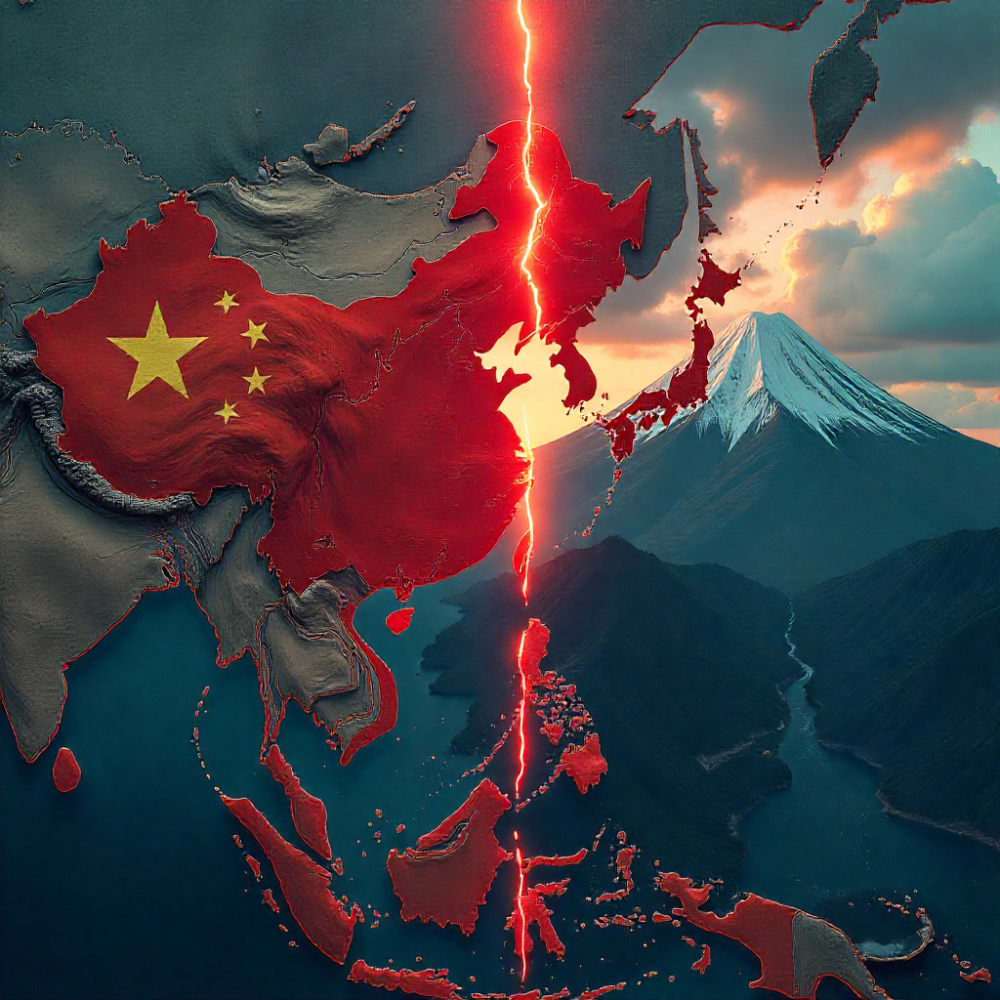
The Unhealing Wound: Disrespect, Revenge, and the Pacific Standoff
1. The Tourist Friction: How "Disrespect" is Manifested
While millions of Chinese tourists visit Japan for its culture and shopping, a growing number of incidents have fueled a narrative of humiliation on Chinese social media (Weibo/Douyin). The perceived disrespect typically manifests in three ways:
- Discriminatory Service: There have been viral reports of restaurants in tourist hubs (like Kyoto and Ginza) explicitly displaying "No Chinese" signs or claiming fully booked tables only when Chinese customers enter.
- The "Civilization" Gaze: Japanese media often scrutinizes Chinese tourists for "bad manners" (loudness, littering). This constant policing is viewed by the Chinese as arrogant—a refusal by Japan to accept that their neighbors are now their economic equals or superiors.
- Vandalism and Mockery: Incidents of graffiti on Chinese cultural centers in Japan or the mockery of Chinese history by Japanese public figures are amplified instantly online, serving as proof that Japan has not changed its imperialist mindset.
2. The Japanese Perspective: Why the Animosity?
The Japanese sentiment is often less about "hate" and more about existential anxiety and territorial fear.
- Territorial Threat: Japan feels physically threatened. The constant intrusion of Chinese Coast Guard vessels into the waters surrounding the Senkaku Islands (claimed by China as Diaoyu) is seen as a precursor to invasion.
- Fatigue with "History Cards": Many Japanese citizens, particularly the younger generation, feel that China weaponizes WWII history to extract diplomatic concessions and humiliate Japan, despite Japan having provided decades of ODA (Official Development Assistance) and apologies in the late 20th century.
- Authoritarian Fear: The Japanese public views China's political system as incompatible with democratic values, leading to a desire to socially distance themselves from Chinese influence.
3. The Chance for Revenge: China’s Strategic Retaliation
For China, the current climate offers a distinct opportunity for "revenge." This is not necessarily a military invasion, but a hybrid warfare designed to break Japan’s spirit and economy.
- Economic Strangulation: China knows Japan’s economy is fragile. By banning Japanese seafood (citing contamination fears) or restricting the export of rare earth metals (essential for Japan’s car industry), China can unilaterally trigger a recession in Japan.
- The Tourism Weapon: Beijing has the power to "turn off the tap." By restricting group travel visas or issuing safety warnings, China can bankrupt Japanese towns that rely on Chinese spending. This is a calculated move to force Japanese business leaders to pressure their own government into being pro-China.
- Diplomatic Isolation: China is actively courting nations in the Global South to isolate Japan diplomatically, painting Japan as a "US puppet" that endangers Asian stability.
4. What is on the Chinese Mind Right Now? (Late 2025)
The prevailing mindset in China is one of "National Rejuvenation" and Zero Tolerance.
- The "Strong Nation" Narrative: The Chinese populace is taught that the "Century of Humiliation" is over. The mindset is: "We were bullied because we were weak. Now we are strong, and we will not tolerate a single dirty look."
- Victimhood turned to Vengeance: There is a collective desire to see Japan "bow the head." Every act of Japanese disrespect confirms the belief that Japan must be humbled by force or economic might.
5. The Geopolitical Imbalance: US, China, and Japan
This friction creates a dangerous instability in the trilateral relationship:
- Japan's Militarization: Fearing China's "revenge," Japan is rapidly abandoning its pacifist constitution, doubling defense spending, and purchasing long-range missiles from the US.
- The American Dilemma: The US needs Japan as its "unsinkable aircraft carrier" in the Pacific. However, if Japan and China escalate a minor tourist dispute or a fishing boat collision into a skirmish, the US is treaty-bound to defend Japan, potentially dragging America into World War III over a minor incident.
- Economic Decoupling: As Japan aligns with the US on semiconductor bans, China retaliates against Japanese automakers. This splinters the global economy, forcing countries to choose sides.
6. The Root of the Evil: Historical Atrocities
To understand why the Chinese desire for revenge is so potent, one must acknowledge the horrors inflicted by Imperial Japan, which remain open wounds because many in China feel Japan has never truly repented.
- The Nanjing Massacre (1937): Over a period of six weeks, the Japanese Imperial Army murdered hundreds of thousands of civilians and disarmed soldiers in Nanjing. The widespread rape and torture created a generational trauma that is central to modern Chinese identity.
- Unit 731: Located in Harbin, this covert biological and chemical warfare research unit conducted lethal human experimentation on Chinese civilians (referred to as maruta or "logs"). Victims were subjected to vivisection without anesthesia, frostbite testing, and pathogen injections.
- The "Three Alls Policy": "Kill all, burn all, loot all." This scorched-earth policy used by Japan in rural China devastated the population and infrastructure, leaving scars that are still visible in Chinese rural demographics today.